
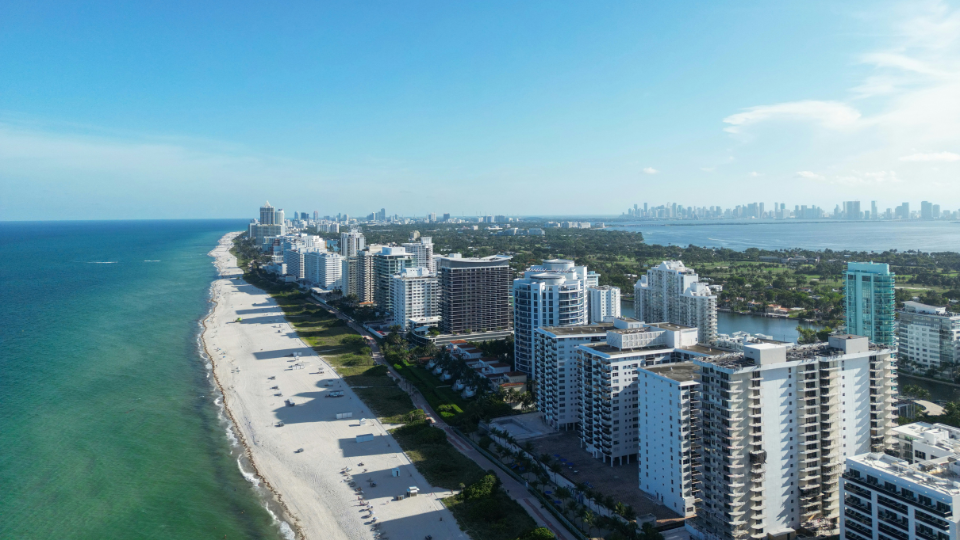
Miami’s shoreline is one of its greatest assets. It’s home to luxury high-rises, thriving tourism, and some of the most valuable real estate in the country. In recent years, that same coastline has become a source of increasing risk. Beneath its surface lies a combination of sinking land, flood-prone infrastructure, and high visitor volume, all of which contribute to growing physical security vulnerabilities.
New data also shows that dozens of Miami’s coastal buildings are slowly sinking. At the same time, the city is adjusting how it manages tourism, impacting foot traffic and economic activity. Today, these trends require a more forward-looking approach to security and risk management.
1. High-Rises Are Sinking on Miami’s Barrier Islands
According to a University of Miami study published in Earth and Space Science, 35 buildings on Miami’s barrier islands experienced measurable land subsidence between 2016 and 2023. The data showed movement of up to three inches (approximately 8 centimeters) over this period.
Affected buildings include high-profile properties such as:
These are not aging or overlooked structures. Many are modern, luxury high-rises located on some of the region’s most valuable land. In several cases, subsidence began after construction was completed and continued over time. Researchers are pointing to a mix of causes, including:
Subsidence currently presents a threat to both the structural integrity and long-term asset value of Miami buildings. Our team at Safe Haven Risk Management provides Security Vulnerability Assessments (SVAs) that help businesses adapt to these challenges by identifying threats and infrastructure weaknesses early, and planning for environmental and operational disruptions.
2. Structural Instability Disrupts Security Systems
Subsidence can lead to physical damage in areas that directly impact property security. Even slight ground movement can misalign doors, weaken fencing, or disrupt surveillance equipment. These issues may go unnoticed in daily operations but can compromise protection during emergencies or security breaches.
Common impacts include:
Residential towers, hotels, and commercial buildings experiencing these issues require a complete review of their physical security systems to maintain full operational functionality.
3. Coastal Properties Face Increased Flood Risk
Miami’s shoreline is experiencing more frequent flooding, even during dry weather. High tides, rainstorms, and rising sea levels are also leading to chronic water intrusion in low-lying areas. Subsiding land lowers the ground elevation as well, increasing flood vulnerability.
For properties on Miami’s barrier islands, flood risks include:
These types of environmental impacts can weaken both structural and operational integrity, requiring adjustments to infrastructure and ongoing monitoring to maintain security performance.
4. High-Traffic Areas Require Additional Access Control
Tourism is a major part of Miami’s economy, especially in coastal areas like Miami Beach, Sunny Isles, and South Beach. Luxury condos and hotels in these zones are often located near public beaches, nightlife venues, and vacation rentals. This visibility brings both opportunity and risk.
In high-tourism areas, physical security challenges often include:
These conditions can complicate day-to-day security operations and increase the likelihood of unauthorized access or delayed incident response, especially in properties with shared or mixed-use environments.
5. Spring Break Restrictions Are Changing the Risk Landscape
In March 2025, Miami Beach officials implemented a strict spring break crackdown. The city used road closures, barricades, and limited beach access to reduce violent incidents and restore order after several years of disruption.
“It’s nice not having stampedes and gunfire regularly,” said Mitch Novick, owner of the Sherbrooke Hotel, in an interview with CBS Miami.
However, the crackdown had significant economic consequences. Business owners reported lower visitor turnout, empty tables, and sharp revenue declines during what had historically been one of their busiest times.
“This year has been disastrous for many businesses down here,” Novick said.
These developments reflect a shift in how public safety policies influence visitor behavior and activity patterns. Reduced foot traffic may lead to a calmer environment, but can also result in decreased visibility and more isolated areas. These changes should affect how businesses manage security and respond to conditions in their local community.
6. How Safe Haven Risk Management Helps Shoreline Properties
Properties along Miami’s coast require security planning that accounts for environmental conditions, building integrity, and even human behavior. We provide Security Vulnerability Assessments designed to identify these interconnected risks and recommend effective, long-term solutions.
Assessments include:
Luxury high-rises, coastal businesses, and residential associations each face varying levels of risk tied to their location, structure, and use. Understanding these current exposures can inform decisions around safety and security, infrastructure, and operational planning.
Coastal Property Security Requires Broader Planning
The security landscape along Miami’s shoreline is becoming more complex. Land subsidence, chronic flooding, and changes in tourism management are creating new challenges for buildings and businesses alike. Each factor increases the need for coordinated security planning that addresses both physical systems and operational realities.
Shifting ground conditions, reduced access during city-enforced restrictions, and increased environmental threats also play a role in how properties must be secured and maintained.
Safe Haven Risk Management helps shoreline properties strengthen their resilience through targeted assessments and actionable strategies. Contact our team to schedule a Security Vulnerability Assessment and prepare your property for the next phase of Miami’s environment.
 Don’t Spook On Security For Ha…
 CISA’s Role in Keeping Your Ph…
 Physical Security Terms Your B…
 How to Manage Your Security Du…
 Could Your Private Practice Be…
Highly customized security solutions for executives and high net worth individuals. We use the experience gained protecting US Secretaries of Read Article

Enhanced Due Diligence provides you with critical background into potential partners or hires. Are they involved in criminal activity? What Read Article

There's no denying the importance of digital security in the modern world. However, in the pursuit of securing our online Read Article

Recent events serve as a reminder to small and medium-sized businesses that inadequate or absent security measures can result in Read Article
The threats organizations face today are evolving and multiplying. For small to medium-sized businesses (SMBs), stakes are particularly high. One Read Article
 P.O. Box 3524
 INFO@safehavenriskmanagement.com
 (404) 510-5425
Copyright 2023 SAFE HAVEN RISK MANAGEMENT LLC . All Rights Reserved. | Website Design + Development by JasonHunter Design

 Facebook
 Instagram
 Linkedin
 Twitter